Monday, July 8, 2013

COMMENTARY: Is VA Secretary Eric Shinseki a Hero or a Villain?

Veterans Affairs Secretary Eric Shinseki
Eric Shinseki, the alternately compelling and confounding secretary of the Department of Veterans Affairs (VA), has taken some heat in recent months. With the disability claims backlog at VA still at more than 1 million, including appealed claims, people are fed up. 

Newspaper editorial boards call the situation at VA a “national disgrace” and have urged Shinseki to quit. Time magazine said he "lacks the creativity and leadership skills” needed for this position. Amid the pressure, Shinseki allegedly submitted his resignation, only to be convinced by the Obama administration to stay on the job. No federal officials will confirm this, but several of my trusted sources in the veteran community say it happened. 


But is all the criticism of the secretary warranted? Well, yes. And no. By all accounts, Shinseki, a disabled Vietnam veteran with a calm, unflappable demeanor, has worked furiously to fix the many problems he inherited when he took over the department. It's an uphill battle implementing real change at such an entrenched bureaucracy, but he's made slow progress. And he's made some good moves.

Yes, the claims backlog and waiting times for those claims to be processed have tragically grown, but that is largely because so many more post-9/11 troops have come home. But in some areas, including conditions at VA facilities and the overall environment for veterans and their families nationwide, things are demonstrably improving for the first time in recent memory.


However, Shinseki has made some stupefyingly bad decisions. Perhaps the worst one came just weeks ago when he gutted the Research Advisory Committee on Gulf War Illness (RAC), an independent board mandated by Congress in 1998. 


Shinseki, who'd previously shown unwavering support for the committee, reversed course for no legitimate reason, firing or removing the committee's chair and half the panel without naming replacements. 


The fear among veterans' advocates is that Shinseki will name discredited people to the RAC, such as people who believe in VA's bogus "stress" theory for Gulf War illness. The RAC as well as the prestigious Institute of Medicine have confirmed that Gulf War illness is real, it is associated with toxic exposures. It is physical, not psychiatric. 


Just when Shinseki was beginning to look like he really cared about veterans, he pulls something this stupid, this egregious. The decision is a slap in the face to the hundreds of thousands of ailing Gulf War veterans who have still not been treated. 


So now you know why I am conflicted about Shinseki. As someone who covered VA for Newsweek during the George W. Bush years, I still contend with ample evidence that things are better now than they were then. Is Shinseki an improvement over his predecessors, Anthony Principi, Jim Nicholson and Jim Peake? If you have to ask, you weren't there.


In a cover story in Newsweek in March 2007 I reported that the VA under Nicholson was an overloaded bureaucracy unprepared for the onslaught of troops returning from war and was failing America’s wounded. USA Today reported that same year that the VA’s clinics and hospitals suffered from hundreds of problems, including worn carpet, damaged floor tiles, leaking roofs and cockroach infestations. That is no longer the case.


While at VA, Nicholson reportedly defended a budget measurethat sought major cuts in staffing for VA healthcare, cut funding for nursing home care, and blocked four legislative measures aimed at streamlining the backlog of veterans benefit claims. Shinseki would not defend such a budget measure.


Nicholson's replacement, Peake, wasn't much better than Nicholson. A medical doctor who'd been surgeon general of the Army, Peake's questionable moves at VA included his refusal to sign the regulation granting herbicide benefits for veterans who had Parkinson’s, heart disease and cancer. Last week I wrote here about how these herbicides, including Roundup, the most popular weed killer in the world, are linked to cancer and many other diseases. Lacking wisdom, courage or compassion, Peake refused to allow sick warriors this coverage.


Robert Walsh, a respected attorney who's represented thousands of veterans with claims before the VA, says Shinseki opened up the process to these claims and fast-tracked them early in his tenure. 


"He (Shinseki) forced the VA benefits system to work as it never had before," Walsh says. "Tens of thousands of families received VA disability benefits and in-home health assistance they desperately needed."


A commendable move by Shinseki, and it showed that things were evidently changing for the better at VA. But lame-brained moves such as decimating the RAC sort of makes us forget the good things he has done and just makes you scratch your head.  


In my recent interview for The Daily Beast with Steven Coughlin, a former VA epidemiologist, he told me the VA routinely disseminated false information about Gulf War veterans, withheld research showing a link between nerve gas and Gulf War Illness, rushed studies out the door without taking recommended fixes by an independent board, and failed to offer crucial care to veterans who came forward as suicidal.


Gutting the RAC just two months after Coughlin exposed the VA to me and a few other journalists was perhaps the most poorly timed decision of Shinseki's tenure. 


As noted by Jess Walker on the blog for Bergmann & Moore, a law firm that solely represents veteran disability cases, "The purpose of an independent advisory panel is to provide VA with invaluable input for the research needed for treatments and benefits – information that is not to be disregarded simply because it is less overwhelming than the logistics of providing treatment and compensation for 250,000 ill veterans. Gulf War veterans, like all veterans, deserve better than this."


Indeed they do. Shinseki's move to essentially quash the RAC calls into question his integrity and judgment. I'm still waiting for him to explain just why on earth he would make such a move. We're all still waiting. Nothing less than his legacy at the VA may depend on his answer.


Tuesday, July 2, 2013

EXCLUSIVE: New California "Strike Force" To Tackle State's Massive Veterans Claims Backlog

Good news for the thousands of California war veterans who've been waiting, some of them for years, for their disability claims to be processed. The Reno Dispatch has just learned that long-pending benefits claims submitted by the state's veterans caught in the Department of Veterans Affairs (VA) processing “log jam” could finally be addressed, thanks to state lawmakers.

California Governor Jerry Brown's new budget has authorized $3 million and 36 limited-term positions that will allow the California Department of Veterans Affairs (CalVet) to work with the national VA office to help alleviate its massive veterans’ claims backlog, which nationally still stands at more than 800,000.

The money will be used to hire a “Strike Force” team of 12 Veterans Claims Representatives (VCR) for each of VA’s regional offices in San Diego, Los Angeles and Oakland to focus on backlogged claims, ensuring they are properly developed and have all necessary documentation needed for adjudication.

This is a refreshing and rare example of a state-federal coalition created for the benefit of veterans. It's pretty obvious that state lawmakers are listening to veterans and growing tired of waiting for the feds to do the right thing. 

Paul Sullivan, a Gulf War veteran and managing director of public affairs and veterans outreach at Bergmann & Moore, a law firm whose entire practice is devoted to assisting veterans with their disability claims, tells The Reno Dispatch that the firm is "very pleased CALVET follows the lead of the Texas Veterans Commission (TVC) and helps our wounded and injured veterans with their VA disability claims. VA truly needs the assistance because the average time for VA to complete a claim is longer than one year, and VA makes mistakes in 30 percent of high-risk claims."

Sullivan adds, "The extra staff hired by CALVET and TVC help our most vulnerable veterans, such as those with new claims, claims on appeal, or claims for post-traumatic stress disorder, traumatic brain injury, or individual unemployability"

The VA has promised to end the massive backlog by 2015. But many sources say that goal is no longer realistic, despite the VA's recent rollout of its new computerized claims system, which I wrote about earlier this year in The Daily Beast

California veterans are among those who have to wait the longest to get the benefits they've earned. The VA's Oakland office, which serves Northern California veterans and has more than 30,000 claims pending, is one of the worst in the nation with a wait period of more than 600 days for initial claims, according to The Center for Investigative Reporting (CIR). 

In a statement today, CalVet Secretary Peter J. Gravett said, “We appreciate the leadership of the Governor and the Speaker on this initiative as well as the Legislature’s continued support of CalVet and its efforts to ensure the well-being of California veterans and their families. Helping them get the benefits they so richly deserve after their honorable service to our country is the very least we can do for them.”

CalVet has already begun advertising to fill the limited-term positions and is looking to hire VCRs with previous veterans’ benefits claims processing experience. The VA's national office will provide office space, computers, phones and other equipment for the Strike Teams which will work under the supervision of CalVet regional office staff.


Monday, July 1, 2013

BREAKING NEWS: America's Favorite Weed Killer Linked to Cancer

It's shameful how few American media outlets have written about the latest scientific studies linking Roundup, the world's most popular and profitable weed killer, and cancer. Might it be because Monsanto, makers of Roundup and as we all know a generally bad corporate citizen with a litany of alleged crimes against humanity, spends billions in advertising and marketing and dedicates a good portion of that budget to print and television ads?  

Monsanto spent $1.28 billion on its various marketing programs in fiscal 2012, according to the company’s annual report. All that money seems to have had an impact. I am only speculating, of course. But why else would the American media ignore the mounting evidence of links between Roundup and cancer? 

The latest is a groundbreaking study showing that the active ingredient in the hugely popular herbicide fuels breast cancer by increasing the number of breast cancer cells through cell growth and cell division. This should be front-page news.

The study, which is to be published in the journal Food and Chemical Toxicology, focused on glyphosate, Roundup's primary chemical ingredient. After comparing how hormone-dependent and hormone-independent breast cancer cell lines were affected by glyphosate, researchers found that glyphosate fuels cancer cell lines that are hormone dependent.

There are in fact several recent studies that show glyphosate’s potential to be an endocrine disruptor, which are chemicals that can interfere with the hormone system in mammals. These disruptors can cause cancer tumors.

A new peer-reviewed report in the journal Entropy, co-authored by Dr. Stephanie Seneff at the Massachusetts Institute of Technology (MIT), argues that glyphosate residues, found in most commonly consumed foods in the Western diet, “enhance the damaging effects of other food-borne chemical residues and toxins in the environment to disrupt normal body functions and induce disease.”

None of this comes as a surprise to me. Roundup has already been linked to non-Hodgkin's lymphoma. A study published back in 1999 in the Journal of American Cancer Society by eminent oncologists Dr. Lennart Hardell and Dr. Mikael Eriksson revealed that exposure to glyphosate "yielded increased risks for non-Hodgkin's lymphoma." This alarming study was curiously not widely publicized.

Monsanto has tried to downplay the links between its products and diseases by putting big money into contract research companies like Exponent, which spews its scientific research findings on behalf of corporate clients, many of which are facing product liability concerns. 

A study published in the journal Regulatory Toxicology and Pharmacology titled "Epidemiologic studies on glyphosate and cancer: A review," which suggests there is no link, was apparently directly supported by Monsanto. The study's author has reportedly served as a paid consultant to Monsanto.

In 2009, a French court reportedly found Monsanto guilty of lying, falsely declaring that Roundup is "biodegradable," "environmentally friendly" and leaves the soil "clean."

Monsanto clearly does not want the world to know the truth about Roundup, one of its fattest cash cows. But what would you expect from a company that in the past brought us DDT, PCBs, and Agent Orange? 

Bottom line: You may not read about it in your local newspaper or hear about it on your favorite TV news show, but Roundup has been repeatedly linked in scientific studies to cancer, as well as many other diseases including Autism. Is there any reason why anyone should believe at this point that Monsanto can be trusted?

Thursday, June 27, 2013

MEMO TO MEDIA: Stop Defending Radical Anti-American Jihadist Anwar Al-Awlaki

Anwar Al-Awlaki
Shortly after the story broke that Anwar al-Awlaki, the American-born imam who was killed by a U.S. drone strike in 2011, influenced the surviving Boston bomber suspect, the misinformation about Awlaki began to spread once again. Some reporters are even trying to rewrite the history of Awlaki, who at the time of his death was the most dangerous and influential radical Islamic jihadist in the world and linked to such terrorist plots as the Fort Hood massacre, the Christmas Day bomb plot and the failed Times Square attack.

The latest example of a journalist getting it all wrong is Nation correspondent and author Jeremy Scahill, who while touting his controversial new book Dirty Wars: The World is a Battlefield has repeatedly offered up a wrong-minded and inaccurate analysis of Awlaki. In just the last few weeks, Scahill has told PBS's Charlie Rose, The Tonight Show's Jay Leno, and MSNBC's Alex Wagner that Awlaki was not always anti-American but was "radicalized by U.S. policies" after he left the country.

Not true.


Efforts by Scahill and other liberal and libertarian journalists to condemn Awlaki's killing by the Obama administration and downplay Awlaki's profound worldwide influence and connection to Al Qaeda are misguided at best. 
Are there legitimate concerns about government overreach in this administration? Yes. But Awlaki's killing was justified.

I've covered the Awlaki saga for more than a decade for Newsweek and other publications, and have frequently visited the mosque he once headed near San Diego. I learned a decade ago that, while Awlaki publicly condemned 9/11, he was a behind-closed-doors adviser to two of the eventual hijackers who lived in San Diego. 

Awlaki held private meetings with Al Qaeda plotters Nawaf Alhazmi and Khalid Almihdhar on Friday evenings after prayer services in a conference room at the Arribat Al-Islami Mosque near San Diego. The nature of those meetings will likely never be known. But the terrorists followed Awlaki to the East Coast when he left the San Diego area. The rest, of course, is history.


Shortly after 9/11, the FBI met with Awlaki several times during which he lied to the bureau about not recognizing one of the San Diego-based 9/11 hijackers. But to get to the truth, all the FBI had to do was visit some of the worshippers at the San Diego area mosque - or just knock on a few doors in that mosque's neighborhood, where several residents recognized the hijackers from their pictures in the newspaper.


The neighbors, none of whom had been contacted by law enforcement when I interviewed them ten years ago, told me they’d seen the hijackers with Awlaki on several occasions at the mosque. I have no reason to believe that any of these neighbors were anything but credible. 


In 2003, one neighbor, Lincoln Higgie, an antiques dealer who lived right across the street from the mosque and had a friendly relationship with Awlaki, told me that Awlaki returned to the mosque just a month before 9/11 and told Higgie that "something very big was going to happen, and that he had to be out of the country when it happened. I didn’t think much of it at the time, but now every time I think about that comment it gives me chills."


There's more. Three years ago, the Investigative Project on Terrorism, a nonprofit research group that is recognized as a comprehensive data center on radical Islamic terrorist groups, obtained several collections of Awlaki lectures on nearly 60 CDs at a bookstore/market in suburban Virginia. The CDs, which were recorded in the late 1990's when he was heading the San Diego area mosque, are filled with speeches with radical themes. 


Awlaki was already under suspicion in the late 1990's for helping run a San Diego-based Muslim charity, the Charitable Society for Social Welfare, considered to be a front organization to funnel money to terrorists. Awlaki was also investigated for supporting the Palestinian terror organization Hamas, for possible direct links to Al Qaeda, and for a visit paid to him by a close associate of Omar Abdel Rahman, the blind sheikh behind the 1993 World Trade Center bombing.


A Joint Terrorism Task Force in San Diego wanted to bring in Awlaki, and a judge in Denver signed off on an arrest warrant on the grounds of passport fraud, but inexplicably the felony arrest warrant was rescinded by the Denver U.S. Attorney's Office in 2002. The next day, Awlaki, who was on a terror watch list, returned to the United States from a visit to Yemen and was apprehended as a terror suspect at the JFK airport in New York. He was questioned but released because there was no open warrant allowing security personnel to arrest him.


Scahill ignores all of these facts and seems unmoved that Awlaki clearly had his hand in a number of terrorist acts. From December 2008 to June 2009, at least 18 e-mails passed between Awlaki and Army Major Nidal Malik Hasan, the suspect in the November 2009 killing of 13 at Fort Hood, Texas. 


After that horrific killing spree, Awlaki said of Hasan, “What he did was heroic and great... I ask every Muslim serving in the U.S. Army to follow suit.”


Failed Times Square bomber Faisal Shahzad reportedly told law enforcement officials that he was a “fan and a follower” of Awlaki, as is the Christmas Day “underpants bomber,” Umar Farouk Abdulmutallab, a Nigerian who claimed the airliner attack over Detroit on behalf of the Yemen-based al-Qaida in the Arabian Peninsula.


I lost no sleep when I heard Awlaki had been killed by a drone strike. There was a mountain of evidence that he was linked to a number of terrorists worldwide. Was he deserving of a trial? No. Is it realistic to suggest that we could have ever taken him into custody alive in Yemen? No.


While the lesser known killing of Awlaki's 16-year-old son by another U.S. drone strike is troubling and should be investigated, and while we must as a nation do all we can to minimize civilian casualties in drone strikes, the killing of Anwar Al-Awlaki was the right thing to do. 

Monday, June 24, 2013

Air Shows Should Be Stopped!


I'm growing tired of reading about fatal crashes at air shows. There was yet another one on Saturday in Dayton, Ohio, where officials say a pilot and wing walker died in a fiery crash at the Vectren Dayton Air Show. A disturbing video posted on the Dayton Daily News website shows the wing walker hanging upside down from a wing as the plane tilts, then slams into the ground and explodes as spectators, including many children, scream in horror. Thankfully, no spectators were hurt. But this crash is just another in an endless parade of horrific incidents at these wildly popular events. Begging the question: when is enough really enough? I say air shows should be stopped, once and for all. 

I may seem like an unlikely person to be calling for an end to air shows. I've been covering the military for 25 years, and I’m a bit of a military airplane nut. I have been since I was a kid who loved movies such as “Twelve O’Clock High" and “The Blue Max.” I love to check out the latest fight jets as well as the vintage aircraft dating back to World War I. 


But I no longer believe air shows are a good idea. The tragedy in Ohio was horrific. And there have been so many others, including another near tragedy just yesterday when John Klatt was forced to land his MX Aircraft MXS after he experienced an engine failure at the Quad City Air Show at the Davenport Municipal Airport in Davenport, Iowa. Klatt was very lucky to walk away in one piece.


The worst air show disaster in recent memory happened a year and 1/2 ago when, according to NBC News, a North American P-51D Mustang flown by James K. "Jimmy" Leeward crashed into spectators at the Reno Air Races in Reno, Nevada, killing the pilot and 10 people on the ground, and injuring 69 others including small children. 


In San Diego, my hometown, the Marine Corps Air Station (MCAS) Miramar Air Show is a hugely popular event each year. I live on the southern edge of the Marine base and can hear the action - and even see some of it - from my office window. It’s exhilarating to say the least. Sometimes the airplanes are so close it feels like they’re landing on our roof. 


The Miramar folks insist their air show has a spotless safety record. But that is not true. Disaster was narrowly averted three years ago when a Marine C-130 cargo plane that was part of the air show dropped a 75-foot refueling hose and its receiving arm on a home in Carmel Mountain. No one was injured, and the house didn’t burn down, but the hose did cause about $10,000 damage, and surrounding residents were traumatized.

What perhaps fewer folks remember is that at the 2004 air show here, stunt pilot Sean DeRosier was tragically killed when his “Cabo Wabo SkyRocker” failed to pull out of a dive.


We hear jet noise from Miramar almost every night, and sometimes it’s deafening, but we don’t complain because we love the military in this household. But living this close to a military air  field can be hazardous A few years ago, a San Diego man lost his entire family – his wife, two young daughters and mother-in-law – when an F/18 crashed into their home as the jet approached Miramar. 


Why increase the risk with unnecessary air shows? Granted, they  are an effective recruiting tool for the military, they have a positive impact on local economies, they’re an exciting and educational show for the whole family, and they certainly make you proud to be an American and proud that we have such a strong and capable military, especially in this volatile post-9/11 world. But these aircraft are built to make us safer, not put us in more danger.

I recognize that both sides of this debate have merit. But ultimately this argument comes down to risk vs. reward, and in my opinion the risk is far greater than the reward.


As I’ve said before, putting these aircraft on display as if they’re part of some Vaudeville act is like putting a killer whale in a fish tank then acting surprised when someone is harmed trying to teach the whale to look cute and jump through a hoop in front of thousands of screaming admirers.


Sorry to put a damper on what are very popular events for aviation lovers. But let's enjoy these remarkable high-performance machines from a safer distance and respect and support the brilliant and brave men and women who build and fly them.

Thursday, June 20, 2013

Terrorism and the NSA: What We Really Have Here Is Failure to Communicate

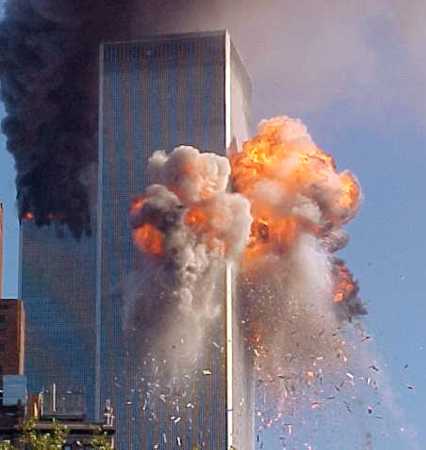
Terrorists attack on September 11, 2001
Conspicuously missing from the current debate over the National Security Agency's role in protecting us from terrorist attacks is the fact that, if federal law enforcement officials would do their job, we wouldn't need so much NSA surveillance. That point was inadvertently made on Sunday when former Vice President Dick Cheney said on Fox News Sunday that if the NSA's surveillance of phone records and emails had been in place before the 9/11 attacks in 2001, the terrorists' plot might have been foiled.

"If we had had this before 9/11, when there were two terrorists in San Diego — two hijackers — had been able to use that program, that capability, against that target, we might well have been able to prevent 9/11," Cheney said. 

FBI Director Robert Mueller recently made the same claim, telling a Senate committee that had the NSA program existed a decade ago they might have been able to track a call made by one of the eventual  9/11 hijackers in San Diego, Khalid al-Mihdhar, to an identified Al Qaeda safe house in Yemen.

“If we had the telephone number from Yemen, we would have matched it up to that telephone number in San Diego, got further legal process, and identified al-Mihdhar,” Mueller said. 

Really? Apparently Cheney and Mueller have both forgotten that the CIA actually identified al-Mihdhar and his terrorist cohort Nawaf al-Hazmi before 9/11 and knew they had connections to Al Qaeda and had passports to travel here. As I reported nearly a decade ago, before arriving in San Diego, al-Mihdhar and al-Hazmi were known by intelligence officials as Al Qaeda operatives who had attended a terror summit in Malaysia just before coming to the United States. 

But the CIA inexplicably didn't share this information with the FBI or any other federal agencies. It was a breakdown by the intelligence community. Had they shared this information, the terrorists would have been found and 9/11 could indeed have been prevented. 

This wasn't the only intelligence blunder related to 9/11. The FBI also didn't do nearly enough after the fact to get to the bottom of the San Diego terror cell. We still do not know the whole story of 9/11. We still do not have a clear understanding of how deep the ties were between the Saudi government and the hijackers, or just who were the mysterious, moneyed Saudis who set up the terrorists in San Diego. Perhaps we never will.

Picked by 9/11 mastermind Khalid Sheikh Mohamed to be among the first of the 19 hijackers to enter the U.S., al-Mihdhar and al-Hazmi, whose name, address and home phone number appeared in the 2000-01 San Diego phone book, entered the country in early 2000 through Los Angeles International Airport and were brought to San Diego by an enigmatic Saudi national named Omar al-Bayoumi, who'd worked for the Saudi government in civil aviation (a part of the Saudi defense department).

Al-Bayoumi set the two terrorists up in an apartment near the San Diego Islamic Center and paid $1,500 to cover their first two months of rent. When asked after the attack in 2001 about al-Bayoumi's possible role in 9/11, San Diego County Sheriff Bill Gore, who was then the local head of the FBI, told me that the local investigation had found no evidence that al-Bayoumi was involved in the attack.

However, a former top FBI official later told Newsweek, "We firmly believed that (al-Bayoumi) had knowledge (of the 9/11 plot)."

After 9/11, al-Bayoumi was detained by New Scotland Yard while living in the U.K., but was released a week later and allowed to return to Saudi Arabia. Gore said the FBI sent agents to London to interview him.

Al-Midhar and al-Hazmi also met regularly at another San Diego area mosque with Anwar al-Awlaki, an imam at the time who would later become one of the world's most notorious anti-American jihadists. Awlaki was killed by a U.S. drone strike in Yemen in 2011.

The two eventual terrorists even lived in the house of a known San Diego FBI informant, Abdousattar Shaikh. Finding these two would not have required any sort of secret NSA surveillance program. The Feds simply didn't do their job. 

I interviewed at least a half dozen people in San Diego a decade ago who had direct links with the terrorists and with al-Bayoumi and other mysterious Saudis who were linked to the hijackers. Not one of them had ever been contacted by the FBI.

And things have evidently not gotten any better. Federal law enforcement was unable to thwart the Boston Marathon bombers - and NSA surveillance again would not have been required to find and follow them. These two alleged terrorists were all over YouTube and various radical websites, and the Russians had warned our intelligence about them. Some things sadly never change.


Related Posts Plugin for WordPress, Blogger...